Bachelor of Science in Biology Education
Even as a little kid, you sloshed through ponds catching frogs and wondering at the little, pearly-black eggs on the underside of a floating leaf. You made necklaces out of snake grass and showed lambs in 4-H. You went to lunch with one eye still unfocused because you were looking into a microscope for the entire previous hour in science class. In short, you've always found life–life itself–a fascinating subject.

You're exactly the sort of person we want to work with at DSU, and exactly the sort of person we want to send into schools to teach the next generation of scientists, researchers, and yes, still more biology teachers.
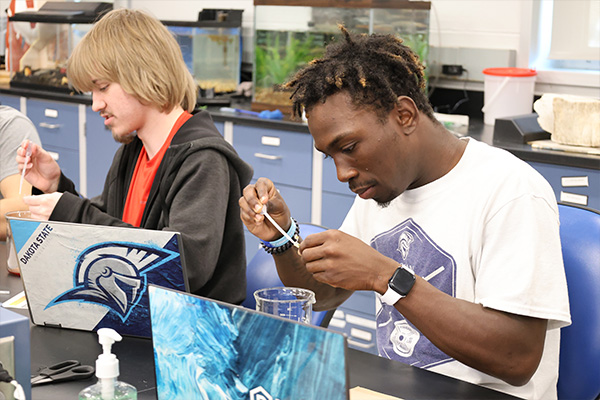
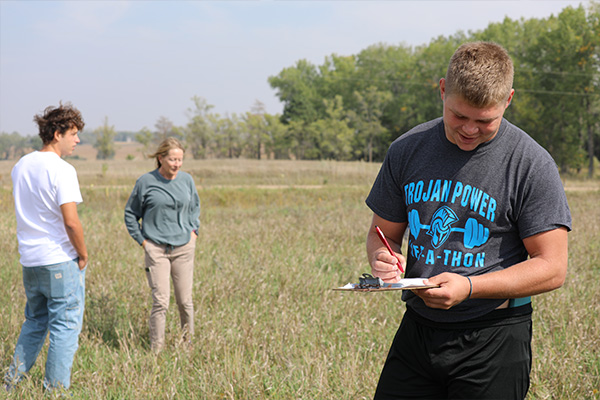
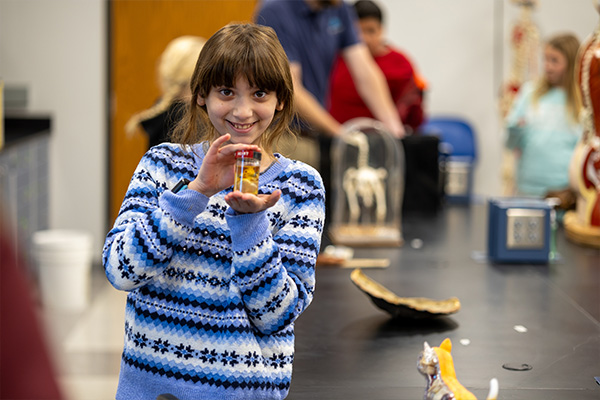
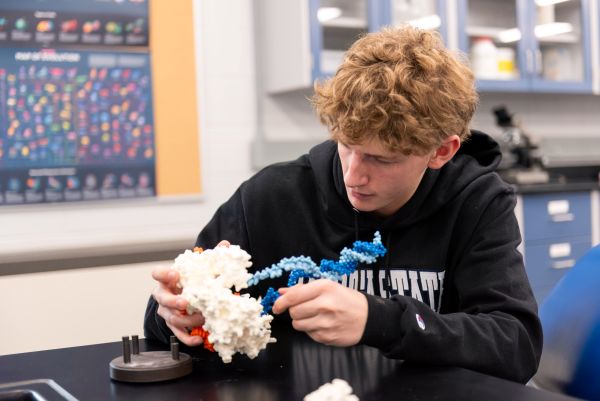
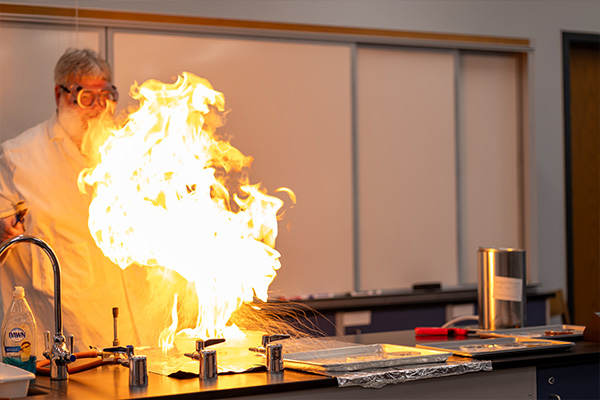
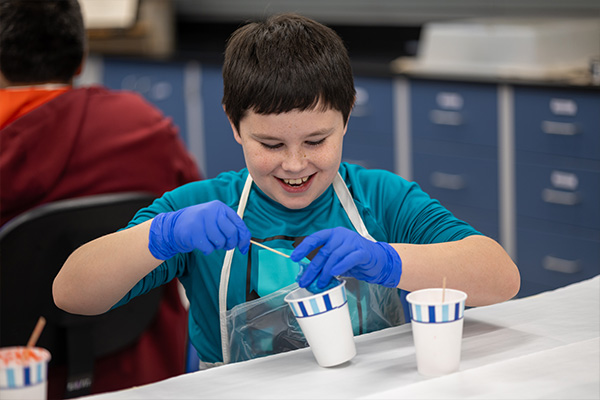
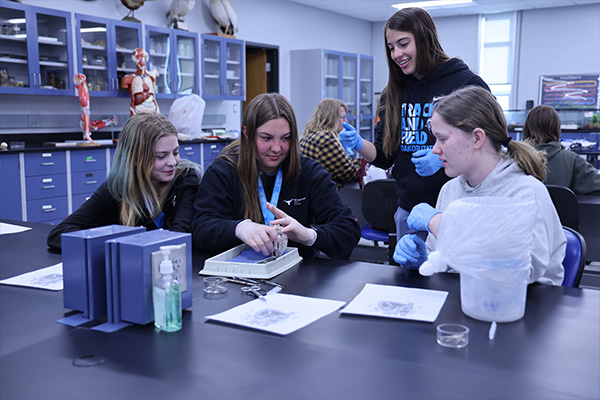
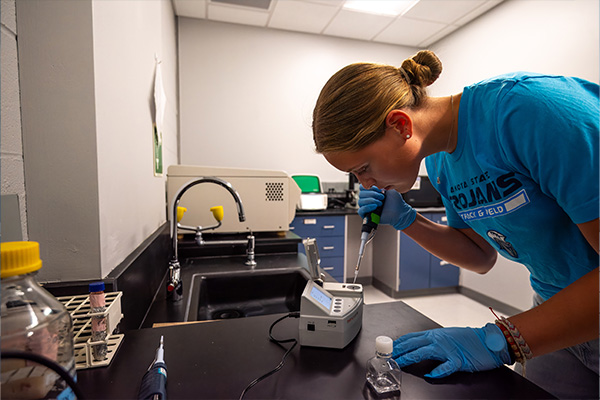
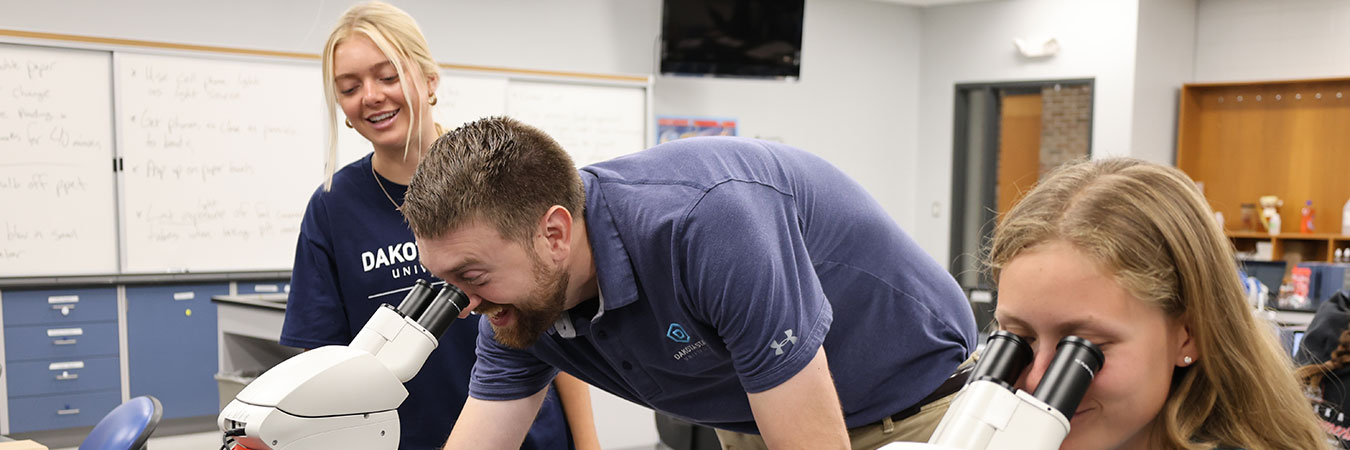
Teaching biology is often a hands-on sort of experience. When you join us at DSU, prepare to get your hands a little dirty, wet, wrapped around a microscope, whatever. Because we believe you can't teach science unless you've done science.
Come slosh around the pond with us.
Possible Job Titles:
- Biology Teacher
- Advanced Biology Teacher
- Anatomy Teacher
- Life Science Teacher
- Secondary Teacher
- Biology Researcher
Salary Range:
Mid 20's to Mid 30's
Job Outlook:
Good
What are the benefits of a DSU Degree?
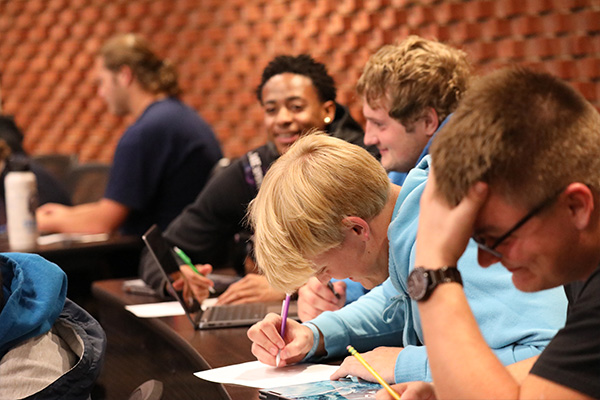
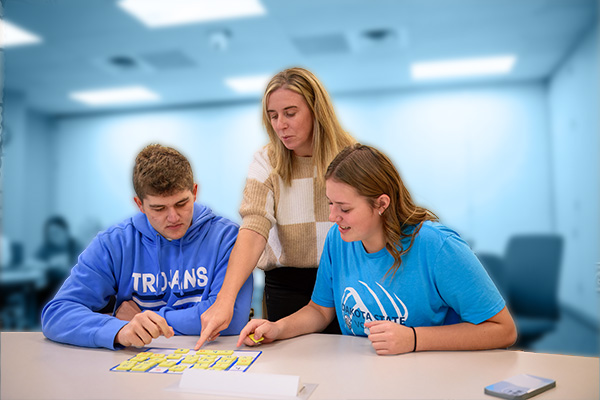
- Class size/personal attention (Faculty-Student ratio):
- 1 to 18 students
- Faculty's unique experiences or certifications in this major:
- Several Arts and Sciences faculty that have taught at the secondary level
- Integrated Technology:
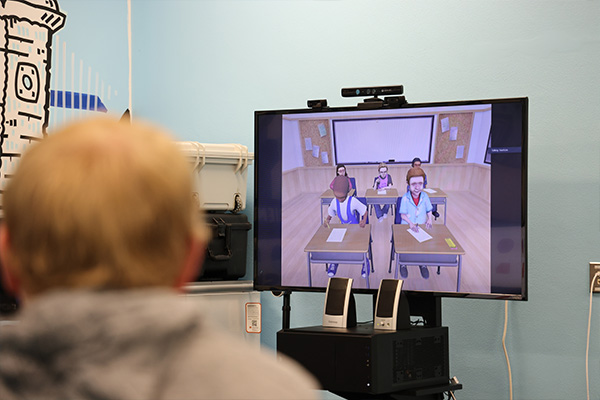
- Throughout the curriculum, introduced to technology that could be used in their classrooms, such as biology computer simulations
- What type of special opportunities can students take part in?
- Senior capstone research project, DSU Math and Science Club, summer research jobs
| Nutrition Facts | |
|---|---|
| Serving Size 1 Semester (16cr) Semesters Per Degree 8 (128cr)* |
|
| Bachelor of Science in Education in Biology | |
| Degree Requirements | 128 cr |
| Credits | |
| Biology Core | 25 |
| BIOL 145 Intro to Science Inquiry | 1 |
| BIOL 201 General Botany | 4 |
| BIOL 311 Principles of Ecology | 4 |
| BIOL 323 Human Anatomy & Physiology | 4 |
| BIOL 371 Genetics | 4 |
| BIOL 498 Undergraduate Research/Scholarship | 2 |
| Select 6 credits from the following: | 6 |
| BIOL 301 Plant Systematics | 4 |
| BIOL 325 Physiology | 4 |
| BIOL 331 Microbiology | 4 |
| BIOL 343 Cell and Molecular Biology | 4 |
| BIOL 363 Ornithology | 3 |
| BIOL 450 Aquatic Biology | 4 |
| BIOL 492 Topics | 1-4 |
| Chemistry Component | 8 |
| CHEM 112 General Chemistry I | 4 |
| CHEM 114 General Chemistry II | 4 |
| Physics Component | 4 |
| PHYS 111 Introduction to Physics I | 4 |
| Computer Technology Component | 6 |
| CIS 350 Computer Hardware, Data Communications and Networking | 3 |
| SCTC 303 Computer Applications in Nat. Science | 3 |
| Minor Requirement | 12-13 |
| NOTE: Students choosing a minor in chemistry or computer education can complete those minors with an additional 12-13 credits because of the core courses required above. Students choosing a minor in another subject area may need to complete an additional 15-18 credits to meet the requirements for the selected minor. | |
| Professional Education Core | 32 |
| NOTE: Students planning to teach outside South Dakota are encouraged to take SPED 100 for 3 credits and HLTH 201 ATOD Prevention Education for 2 credits. | |
| Pre-Professional Block | |
| EDFN 338 Foundations of American Education | 2 |
| EPSY 302 Educational Psychology | 3 |
| INED 411 South Dakota Indian Studies | 3 |
| SPED 100 Intro to Persons with Exceptionalities | 2 |
| Early Professional Block | |
| EDFN 475 Human Relations | 3 |
| EPSY 330 Human Growth & Development | 3 |
| SEED 450 7-12 Teaching Reading in the Content Area | 3 |
| Advanced Professional Block | |
| SEED 302 Secondary and Middle Level Content Methods: Science Major | 2 |
| Student Teaching Semester | |
| SEED 401 Methods of Education Technology | 1 |
| SEED 471 Secondary Education Classroom Management (RECOMMENDED) | 1 |
| SEED 488 7-12 Student Teaching | 10 |
| General Education Requirement | 30 |
| Institutional Requirement | 11 |
| * The serving size is based on a four year degree plan, so your course load may vary depending on your specific educational goals. The values here are current as of the 2009-10 DSU course catalog. | |