Bachelor of Science in Computer Education

Computer Education Survival Tip #1032:
When the history teacher breaks down for the third time this week and weeps openly in the lounge, that's not the best time to talk about how students actually sprint to your classroom to be first to lay claim to one of the quad-core machines you just installed.
Computer Education Survival Tip #511:
When you are teaching fellow teachers how to use the latest technology, and that stunning new French teacher is amazed at your skill and asks if you will "come fix my home computer," even though it may seem wrong, the word is pronounced "wee" despite its being spelled "oui". Got it? Wee.
Possible Job Titles:

  • Computer Teacher
  • Technology Education Instructor
  • Technology Resource Teacher
  • Industrial Technology Teacher

Salary Range:

Mid 20's to Mid 30's

Job Outlook:

Very Good

Benefits of a DSU Degree?

  • Class Size/personal attention:
    • 24:1
  • Cool facts:
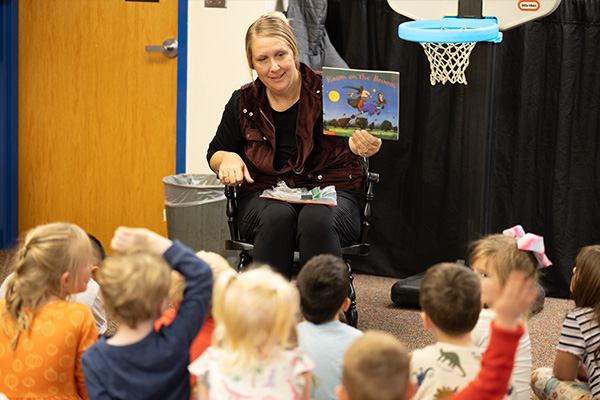
    • Students are able to teacher K-12 computers giving students opportunities to teach in the elementary, middle or high school grades. Students also have the expertise to work as technical coordinators for a school district.
  • Faculty's unique experiences or certifications in this major:
    • Many faculty teaching in this major have had previous experience teaching in school districts, worked in business, and are currently working with school districts on state projects.
  • Integrated Technology:
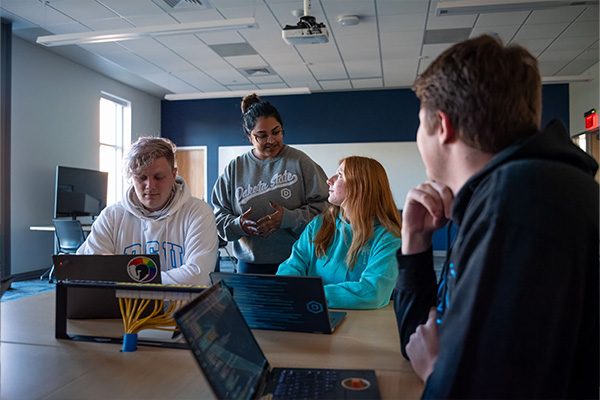
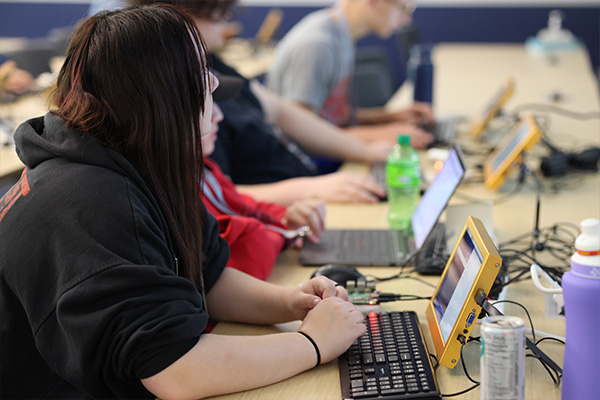
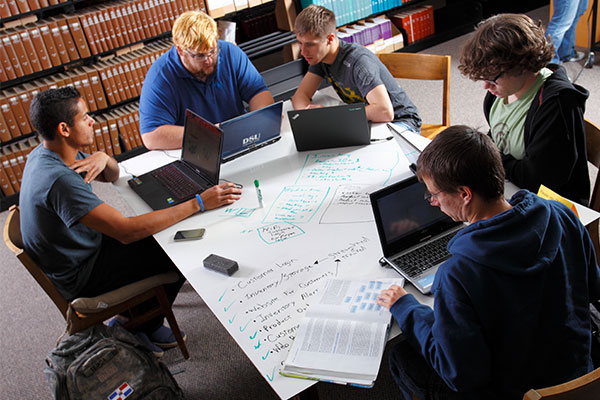
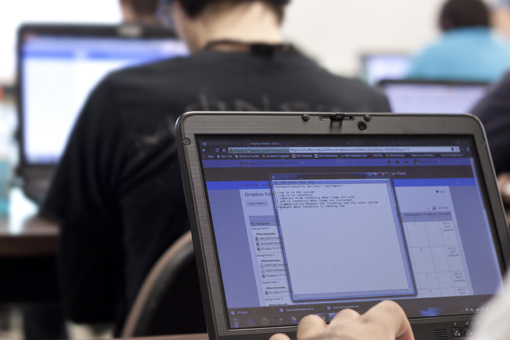
    • Students have the benefit of using one-to-one wireless mobile computers on campus giving them the experience needed to teach in South Dakota schools that are moving to one-to-one classrooms.
  • What type of special opportunities can students take part in?
    • There are various organizations that students can obtain membership in such as Phi Beta Lambda, Computer Club, Gaming Club, Student Senate, Students in Free Enterprise, and Kappa Sigma Iota. Scholarships and grants are also available by applying to the DSU Enrollment Services Office.
Nutrition Facts
Serving Size 1 Semester (16cr)
Semesters Per Degree 8 (128cr)*
Bachelor of Science in Education in Computer Education
Degree Requirements 128 cr
Credits
Computer Technology Core 36
CIS 130 Visual Basic Programming 3
CIS 251 Business Applications Programming 3
CIS 275 Web Application Programming I 3
CIS 325 Management Info Systems 3
CIS 332 Structured Systems Analysis and Design 3
CIS 350 Computer Hardware, Data Communications & Networking 3
CIS 383 Networking I 3
Choose three credits from the following 3
CSC 206 Adv. Computer Applications 1
CSC 207 Adv. Applications: Spreadsheet 1
CSC 208 Adv. Applications: Database 1
CSC 209 Adv. Applications: SAS 1
EDFN 365 Computer-Based Technology and Learning 3
EDFN 465 Multimedia and Web Dev. in Education 2
CSC/CIS/OED elective (200 level or above) 7
Select a Minor 19
Professional Education Core 32
NOTE: Students planning to teach outside South Dakota are encouraged to take SPED 100 for 3 credits and HLTH 201 ATOD Prevention Education for 2 credits.
Pre-Professional Block
EDFN 338 Foundations of American Education 2
EPSY 302 Educational Psychology 3
INED 411 South Dakota Indian Studies 3
SPED 100 Intro to Persons with Exceptionalities 2
Early Professional Block
EDFN 475 Human Relations 3
EPSY 330 Human Growth and Development 3
SEED 450 7-12 Teaching Reading in the Content Area 3
Advanced Professional Block
SEED 302 Secondary and Middle Level Content Methods: Business/Computer Major 2
Student Teaching Semester
SEED 401 Methods of Education Technology 1
SEED 471 Secondary Education Classroom Management (RECOMMENDED) 1
SEED 488 7-12 Student Teaching 10
General Education Requirements 30
Institutional Requirements 11
NOTE: Majors must take PSYC 101 and either HIST 151 or HIST 152 as part of the system- wide general education requirement.
Majors must take CSC 150 as part of the institutional graduation requirements
* The serving size is based on a four year degree plan, so your course load may vary depending on your specific educational goals. The values here are current as of the 2009-10 DSU course catalog.
 
Last Updated: 8/4/09