Bachelor of Science in Scientific Forensic Technology
A team of lawyers and industrial engineers pore over the hard data in a board room. To the experts, the case is clear: the wrong hardness of steel was used to make a cotter pin. The pin held in place a larger rod, which in turn maintained tension on a pivoting hinge which kept a specific brand of horse trailer properly attached to the vehicle towing it. So when the cotter pin failed, the trailers came loose on the road, endangering people and animals, and in one case, running an empty horse trailer through the front lobby of a glue factory. Well, it wasn't funny at the time.



The problem the lawyers face is clear: How to help a jury understand exactly what went wrong, mechanically, without confusing or boring them? What are they going to do, pass around a cotter pin? Wheel in an old chalk board? Drag in some guy in a lab coat to lecture for hours about tensile strengths and fracture points?
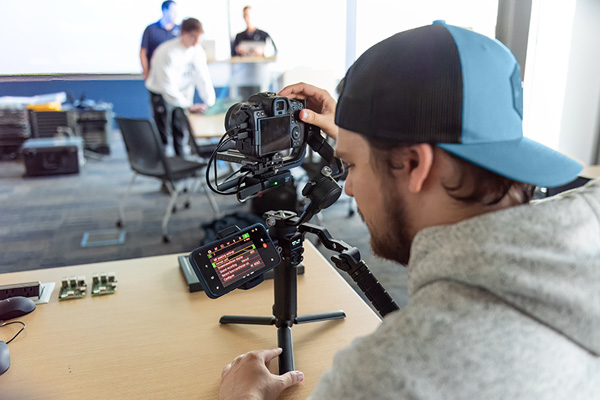
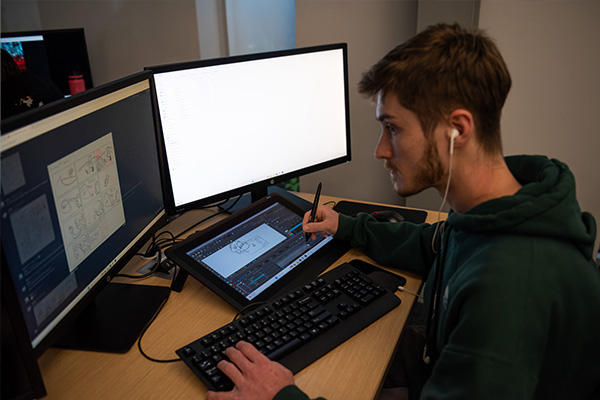
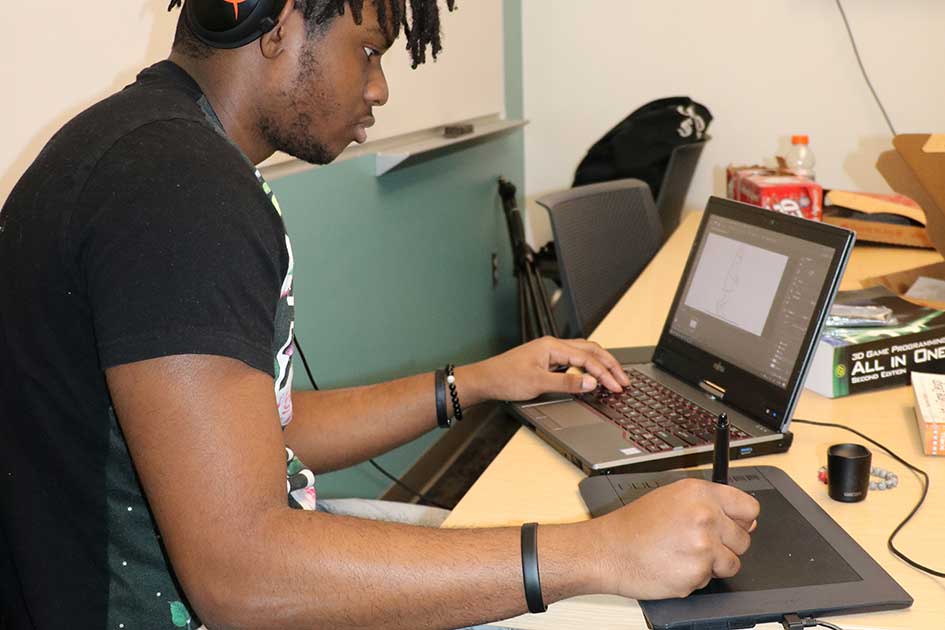
Not a chance. They've got you on retainer—a very expensive retainer. And thanks to your degree in Scientific Forensic Technology, your job is to create a computer animation showing the jury the exact sequence of events. When the jury is able to see your finished video showing the critical failure that an otherwise uninteresting little piece of metal contributed to the crash, you can rest assured that they will all agree with the engineers.
And the defense attorneys will have also learned an important lesson, too: Next time, they're hiring you.
Possible Job Titles:
- Criminalist
- Crime Scene Investigator
- Accident Reconstructionist
- Forensic Chemist
Job Outlook:
Excellent
What are the benefits of a DSU Degree?
- Class size/personal attention (Faculty-Student ratio):
- Small class size and excellent faculty-student ratio
- Cool facts or interesting things about this major:
- Developed based on advice from state and national crime labs and legal experts
- The combination of chemistry and physics makes this forensic science program nationally unique
| Nutrition Facts | |
|---|---|
| Serving Size 1 Semester (16cr) Semesters Per Degree 8 (128cr)* |
|
| Bachelor of Science in Scientific Forensic Technology | |
| Degree Requirements | 128 cr |
| Credits | |
| Scientific Forensic Technology Core | 42 |
| CHEM 114 General Chemistry II | 4 |
| CHEM 326 Organic Chemistry I | 4 |
| MATH 125 Calculus II | 4 |
| MATH 321 Differential Equations | 3 |
| PHSI 343 Introductory Thermodynamics | 2 |
| PHYS 213 University Physics II | 4 |
| SCTC 332 Instrumental Methods of Forensic Detection | 4 |
| SCTC 381 Forensic Probability and Statistics | 3 |
| SCTC 390 Seminar in Scientific Forensic Technology | 3 |
| SCTC 451 Mechanics for Forensics | 4 |
| SCTC 452 Forensic Analysis of Materials and Effects | 3 |
| SCTC 460 Medical Biochemistry for Forensics | 3 |
| SCTC 494 Internship in Forensics | 1 |
| Supporting Coursework Component | 24 |
| ARTD 282 2-D Design on Computers I | 3 |
| ARTD 285 2-D Design on Computers II | 3 |
| ARTD 336 Digital Photography | 3 |
| ARTD 382 3-D Design on Computers I | 3 |
| ARTD 385 3-D Design on Computers II | 3 |
| ARTD 436 Digital Photography II | 3 |
| CIS 388 Computer Forensics Fundamentals | 3 |
| ENGL 379 Technical Communication | 3 |
| Electives | 21 |
| NOTE: Three of these credits will have been met upon completion of MATH 123, CHEM 112, PHYS 211 as part of the system-general education requirement. | |
| General Education Requirements | 30 |
| Institutional Requirements | 11 |
| NOTE: Majors must take ART 121, MATH 123, CHEM 112, PHYS 211 and SOC 285 as part of the system-wide general education requirements. SPCM 215 is highly recommended | |
| * The serving size is based on a four year degree plan, so your course load may vary depending on your specific educational goals. The values here are current as of the 2009-10 DSU course catalog. | |