
Analytics and Applied Artificial Intelligence, MS
Program Quick Facts
Credits
30
Start Terms
Fall
|Spring
|Summer
Available
On Campus
|Online
Tuition
$3,365.10
estimated cost per semester
As analytics and AI continue to advance in the workforce, there is a growing demand for professionals with specialized training. The Master of Science in Analytics and Applied Artificial Intelligence prepares you to identify data-driven challenges and develop analytical solutions.
By choosing to pursue your MSAA degree at DSU, you will learn to transform large data sets into actionable insights using the latest AI technologies and state-of-the-art research facilities. The program emphasizes business applications, enabling you to analyze data for large organizations through business intelligence and data visualization techniques. You will acquire the necessary tools to solve problems, explore alternative approaches, manage projects, and interpret analytical results effectively.
MSAA curriculum and experience highlights

Customize your analytics and applied AI degree
Customize your master's program to your area of interest and career goals with one of the MSAA tracks:
- Business
- Healthcare analytics
- Information systems
- General
Understanding messy data
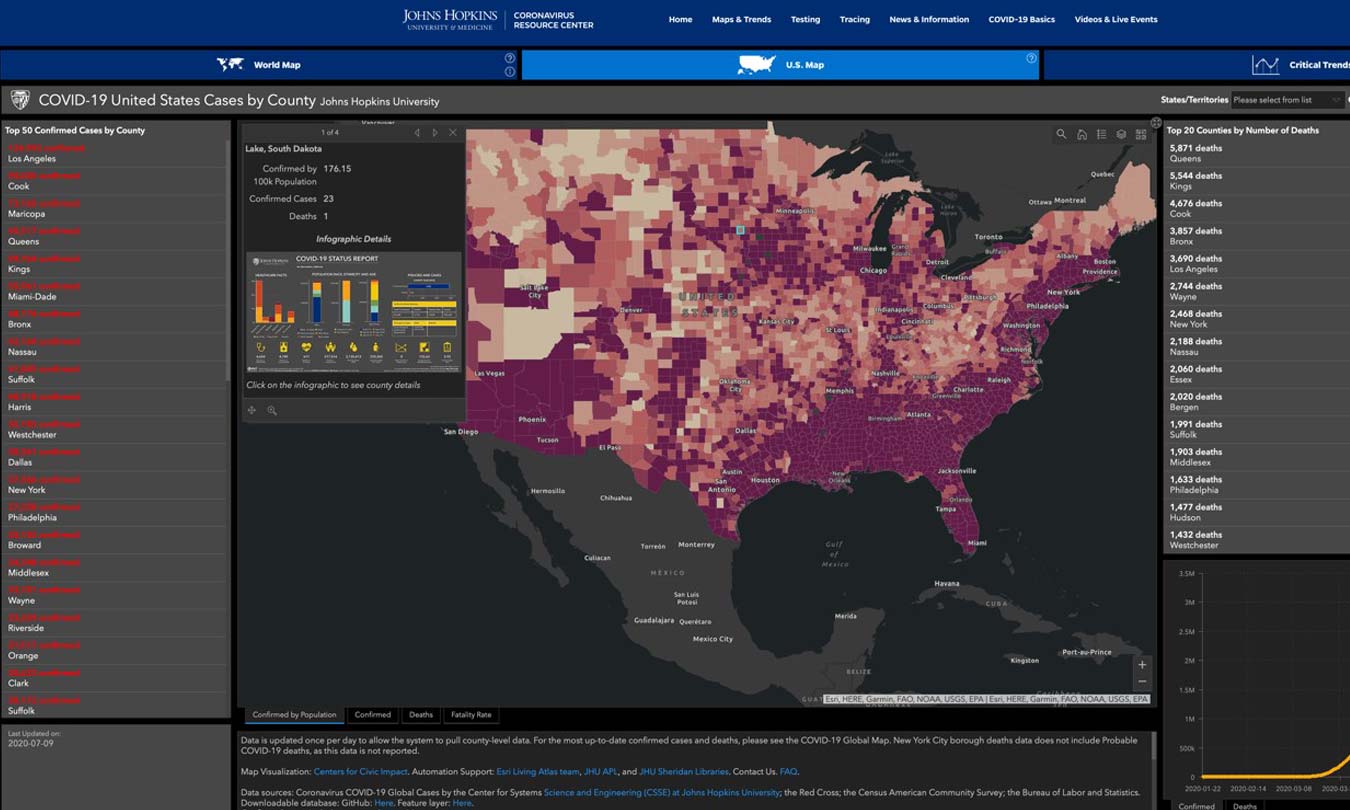
Large amounts of data, often referred to as messy data, can be challenging to interpret. However, they also offer valuable opportunities for learning and decision-making. Students in our Master of Science in Analytics and Applied AI program learn to utilize tools like Hadoop, Spark, and Kafka to transform this information into insightful data visualizations.
“Governments, businesses, organizations, and citizens need highly-trained individuals with the knowledge and skills to develop artificial intelligence that will increase efficiency and productivity, improve safety and security, and enhance the human condition in an ethical manner.”
Dr. Rebecca Hoey, Provost and Senior Vice President for Academic and Student Affairs
Why choose DSU?
Flexible learning opportunities
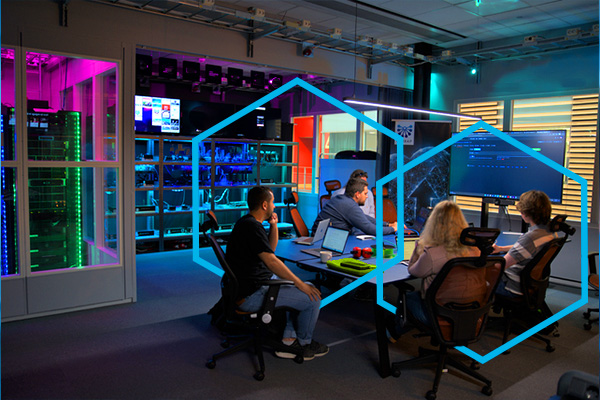
Earn your MS for about $3,365 per semester at your own pace with live or recorded classes, online tools, and full support. Study full-time or part-time and finish in just two to five years.
Expertise in innovative technology
We are a leader in data science and AI, offering hands-on learning with cutting-edge tools and real-world innovation in fields like cybersecurity and healthcare. With expert faculty and strong industry ties, DSU prepares you to lead in the evolving world of AI.
Notable courses
This course provides practical application of organizational behavior concepts and addresses how they affect employee motivation, group dynamics, communication, coordination, change, and adaptation within an organization. Students will also learn psychological and sociological concepts with the human resource management process.
This course focuses on two strategic aspects of technology and marketing: the application of technology on marketing activities and the strategies associated with the marketing of technology products. As part of the strategic marketing planning process, emphasis will be on segmentation, positioning, and marketing mixed with issues found within a global technology environment.
This course combines a traditional course in microeconomics with practical applications of advanced analytic for business decision-making. Students will gain experience with technological tools such as statistical packages and other AI-infused analysis tools.
This course will provide an introduction to programming for data analysis with an emphasis on large datasets. The programming language used is Python, a tool that is easy to learn and fast to code. In the first half of the course, students will learn the core of ideas of programming. Through writing code to deal with Big Data generated by social media sites, students will learn flow control, input and output, data structures (e.g., arrays, lists, trees and hash tables), iteration and recursion, and classes and object-oriented programming. In the second half of the course, students will learn how to use Python for effective data analysis. Specific topics covered in the course are vector computation and mathematics with NumPy, statistical computation with SciPy, working with tabular data with Pandas, and implementing analytics algorithms using Python.
This course focuses on the use of software to measure, monitor and predict the evolution of key enterprise variables and performance indicators and present them in the form of usable information supporting the business decision-making process. Students also learn techniques to present analytical results visually and communicate the business insights revealed by analytics effectively. Other topics covered in the course include data visualization using Tableau, OLAP modeling, business reporting and dashboards.
Faculty
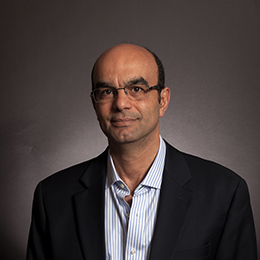
Use the Next and Previous buttons to page through faculty profiles. Use Tab to move through currently displayed profiles.

Career paths with a masters in applied AI
MSAA Trojan alumni have completed sufficient internships and practical training in AI and big data frameworks. They have advanced to roles as software engineers, data analysts, data scientists, and more, working for major industry partners like:
- Amazon, eBay, Kroger, Disney
- T-Mobile, Verizon
- Bancorp, Citibank, Chase, Wells Fargo
- Sanford Health, Mayo Clinic, Avera Health
Your future at DSU begins today.
- A bachelor’s degree from an accredited institution.
- Minimum 2.7 GPA
- Transcripts showing completion of courses in:
- Database design/programming including familiarity with SQL
- Understanding of the principles of programming
- Understanding of statistical principle
- If you don’t meet all requirements, you may still be accepted but might need to take foundational courses.
- International applicants must have a degree equivalent to a U.S. four-year degree.
- No GRE is required.
Next steps
- August 15 (April 15 for international students) for admission for the following fall semester
- November 30 (November 1 for international students) for admission for the following spring semester
- April 30 for admission for the following summer semester