Education and Technology, MSED
Program Quick Facts
Credits
30
Start Terms
Fall
|Spring
|Summer
Available
Online
Tuition
$3,365.10
estimated cost per semester
Technology is at the forefront of our lives and our classrooms. With an online Master of Science in Education and Technology (MSED) degree from DSU, you can become an expert in integrating technology into learning environments and a leader in providing a vision for utilizing technology in your school or organization.
Technology is changing at a rapid pace, that's why we continuously work to ensure our course offerings help you learn the latest and greatest technology tools and pedagogical approaches. You will become proficient in a variety of software, hardware, and programming languages, and you will enhance your instructional skills within a technology-rich learning environment. The tech knowledge will benefit your learners and position you as a leader in education.
MSED curriculum and experience highlights
In-demand specializations
Customize your master's degree to your interests and career goals with a specialization in educational technology, computer science and cyber education, or literacy instructional coaching.
Educational technology
This specialization equips educators with the skills to effectively use computer technology to enhance student learning and support their colleagues in doing the same. You will explore the ever-evolving landscape of technology and gain the knowledge needed to integrate these tools across all areas of education.
Computer science and cyber education
This specialization enables educators to teach dual credit courses in computer science education. You will be prepared to equip students for innovative careers in the computer science sector at community colleges or within your own district.
Literacy instructional coaching
This specialization equips teachers and literacy leaders with tools to mentor peers, improve literacy, and promote student success. Graduates will be skilled instructional leaders capable of using digital resources and data analysis tools to enhance student outcomes.

100% Online Flexibility
The master’s degree program offered is fully online, providing flexibility through asynchronous courses that seamlessly integrate with both professional and personal commitments. With a manageable 30-credit curriculum, this program is cost-effective, plus educators in South Dakota can benefit from reduced tuition rates available through the State Employee Tuition Benefit program.
Advance your role
Enrolling in the Master’s in Educational Technology at DSU can significantly enhance earning potential, facilitate entry into leadership positions, and expand career pathways.
Applicants are not required to hold a teaching certification or a prior education degree; however, it is essential to recognize that completion of the MSED program does not equate to obtaining South Dakota teacher certification unless the applicant already possesses a valid teaching certificate. Additionally, MSED graduates may qualify for certification recommendations in other states, although the specific criteria may vary.
Why choose DSU for an education degree?
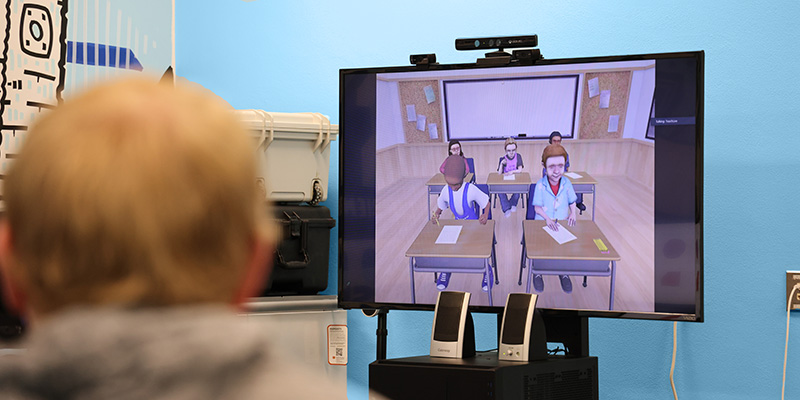
EdTech expertise
Apply what you learn immediately in your classroom or educational setting. The graduate program curriculum is intentionally designed with the most current technology tools and teaching strategies. Our program prepares teachers to understand, teach, and apply digital skills in areas including cybersecurity, data privacy, artificial intelligence, cloud computing, and learning analytics with standards-based learning outcomes.

Cut your tuition in half
Elementary, secondary, and vocational teachers may qualify for a 50% tuition reduction on the on-campus rate, available for up to 6 credits per year. To receive the discount, you must have a current teaching contract for the fall and spring semesters. For summer classes, you will need a contract for the upcoming school year.
Faculty







Opportunities in the classroom and beyond
Graduates of the Master's in Education and Technology program at DSU have secured teaching positions across South Dakota and in other states. If you're considering careers outside of education, the curriculum of this program also prepares you for various roles in Human Resources. You will finish as leaders in both educational and business settings by integrating technology to enhance learning.
Your future at DSU begins today.
- A bachelor’s degree from an accredited institution.
- Minimum 2.7 GPA
- Basic knowledge of computers and their applications for educational purposes demonstrated in one of the following ways:
- Tech endorsement from an accredited university.
- In-service position as full or part-time technology coordinator, integrationist, or facilitator in a public school.
- Instructional designer/trainer, or distance education support specialist in higher education or business/industry.
- Personal or professional development experiences that indicate computer experiences.
- A teaching certificate is not required to apply to this program.
- If you don’t meet all requirements, you may still be accepted but might need to take foundational courses.
- No GRE is required.
Next steps
- August 15 for admission for the following fall semester
- November 30 for admission for the following spring semester
- April 30 for admission for the following summer semester